Sharing Space in Urban Homes

It’s a common deterrent for those looking at urban homes, condos, and apartments: “We just can’t find a place big enough.”

For those who live alone, are married and child-free, or cohabitate without children, this might not be an issue; one or two people can easily squeeze themselves into a small living space and get comfortable there for a long, long time. But, what about those of us with children? Not just that, what about those of us who want multiple children?

How can a large family (I’m talking about a family with at least two children) find a place that’s affordable, while allowing each family member enough room to stretch their legs every once and a while?

Some options to consider:

1. Share your bedroom with an infant/toddler.
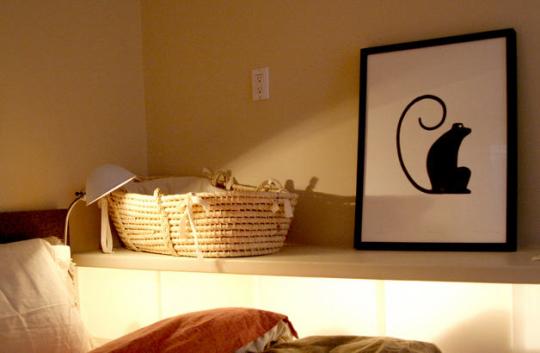
My husband and I lived in a loft apartment when our son was born and, therefore, ended up sleeping in the same room as our son for the first 18 months of his life. We started with a co-sleeper attached to the bed, then moved it to the wall next to the bed (4ft away), then to the other side of the room (about 20ft away). This arrangement is not nearly as inconvenient as one might think and comes in really handy for a mother who plans on nursing her children past their first year. In such circumstances, this arrangement is actually more convenient. In our new home, our son sleeps just on the other side of our bedroom door (but usually ends up in our bed at about 6am each morning anyway). Frankly, we have grown accustomed to him being nearby and we like it that way for now.

It should not be assumed that, once a couple discovers there is a baby on the way, they must shop around for a two-bedroom home. Sharing a room with your child may not work for everyone, but it’s at least worth a shot. You can all be perfectly comfortable sharing a bedroom for a very long time, before you ever need to consider “upscaling.” And, when the time comes to shop around…

2. Reconsider “bedroom.”

Why does a toddler (or a preschooler, for that matter) need a large bedroom? I can understand a parent’s desire to create a space unique to their child. (I feel that desire, too.) But, is a separate room really necessary? Take a quick search through home design blogs and you’ll find examples of excellent kids’ space built into closets, attics, breakfast nooks, lofts, and other odd places. A child can be afforded plenty of privacy, seclusion, and creativity in any sort of space, regardless of size. (This includes even tiny outdoor spaces, which are often overlooked when it comes to providing space for kids.) When did our idea of “bedroom” expand to include a private library, playroom, bathroom, and walk-in closet? With a little creativity, any extra bit of space can be transformed into a bedroom for a small child! And, when all else fails…

3. Think “Bunkhouse.”

I grew up in a house where both me and my two brothers each had our own bedroom, so I understand the desire for individuality, privacy, and space. And I know that there are many benefits to living in a large home–especially when considering entertaining guests. But, just because there are benefits to each family member having individual private space, we shouldn’t feel like we are neglecting our kids by making them share their bedrooms. In fact, it might be in their better interest to learn to share space now, before they find themselves in their freshman year at college, fighting with their new roommate over whose job it is to wash the window.

I’ve seen some amazing ideas online for shared bedrooms for kids–everything from a preschooler sharing with a newborn, to preteen siblings (a brother and sister, nonetheless) learning to give each other space in a room where space is limited, to four sisters sharing a room well into their teens. From my own experience, thinking of the friends I’ve known throughout my life who have siblings, it seems that most shared their room at some point in time. I might venture to say that, with some exceptions, most would not have had it any other way. Sharing a bedroom teaches children cooperation, consideration, and aids in bonding. Think: summer camp every day.

Sure, there are some sisters who end up as enemies from childhood spats in their shared room; and there are certainly stories I would have rather not heard about shared boys’ rooms. But, we all need to learn to share space eventually and we shouldn’t feel guilty if we start our kids young. Heck, they might end up as best friends because of it!

I guess my point is pretty simple:

If we think that a growing families necessitates a growing home (which often insinuates moving out of the city), we are missing out on the ways we can adapt the space we currently have to meet our growing needs.

Why can’t a family of four be comfortable in a two-bedroom home?
Why can’t a family of six live in a three-bedroom home?

I know that there are obvious caveats to this: to keep the average person sane, there must be at least some private space or some way to get away from the others–a quiet reading nook, a cozy bathroom, a backyard patio. So, that’s where creativity comes in!

What’s the coolest space adaption you’ve seen a family make?

Photo credits:
1. Apartment Therapy
2. oh happy day
3. Cookie Mag

Summer in the City

Between buying a house, packing up our apartment, wrapping up the busy season at work, my husband beginning his busy season at work, and taking care of my mother in-law after spine surgery, blogging hasn’t been a priority in the McEwan house.

But.

I wanted to take at least a moment to share my favorite things about summers in Cincinnati, Ohio.

Tall Stacks Festival
Tall Stacks is supposed to happen every three or four years, but hasn’t happened since 2006 and can’t find any information about when we can expect the next festival. The festival features national, regional, and local music acts, loads of expressions of Ohio river culture, and appearances by dozens of fabulous riverboats. Highlights from 2006: Heartless Bastards, Wilco, Medeski Martin & Wood, Over the Rhine, Blind Boys of Alabama, and Rosanne Cash. I sure hope they schedule another one soon… (Does anyone know any insider information about this?)

Fountain Square
Cincinnati really does it up on the Square during the summer. There are public events scheduled nearly around the clock, with everything from family-friendly movie nights to wine tastings. You can expect live music nearly every night of the week (Friday nights courtesy of Midpoint Music Festival) and some days during the lunch hour (I’ll be playing an Acoustic Thursday on August 26th). It’s nice to know that I can walk down to Fountain Square on any given day and find tons of people milling around. The energy is infectious.

Kayaking on the Little Miami
Although I haven’t been since my son was born, taking a day-long kayak trip down the river is easily one of my top five favorite summer activities. I don’t have my own boat, but I have rented multiple times from Morgan’s Canoe Livery and have always been pleased (though the price has increased quite a bit since my first time five years ago). Does anyone else have a favorite Livery?

Backpacking at the Red River Gorge
Confession: I’ve never been to the Gorge in the Summer, but I’m sure it’s just as fantastic as it’s been in the Spring. If you’re looking for a nice extended weekend backpacking trip within a few hour drive, it can’t be beat. And if backcountry camping is not your bag, you can find rental cabins with basic amentities to soften the wilderness experience. Try Red River Gorgeous on for size.

Local State Parks
Growing up in Chicago, with the beautiful Lake Michigan in the city and (seemingly) millions of fresh water lakes within driving distance, lake culture is in my blood. Since I can’t drive the 6 hours to Michigan where my family has a small summer cottage, it’s nice to have other lakes nearby. The only one I’ve spent a decent amount of time at is at Caesar Creek State Park, where the beach is clean and swimming-friendly, if a bit cold. A lot of my friends frequent East Fork State Park, as well. (There was a national rowing regatta held there last weekend. How cool is that?)

The Public Library
I know that the library is not a particularly summer activity, but hot summers do give me a new appreciation for the downtown library’s convenient, walkable location and it’s air conditioned comfort. It’s the perfect place to pop-in during a hot walk downtown, use the bathroom, change a diaper, and see what’s new on the shelves. They just held their summer Friends of the Library book sale, which was awesome. (Sorry if you missed it!)

Biking to work
I’ll admit it–I’m a fair weather bicyclist. But, since I live a mile from my office, I have absolutely no excuse to drive to work unless necessary. Since the onset of Spring, I’ve walked or biked to work about 80% of the time and it’s proven to be a great decision. Not only do I get some exercise, but I get to see bits and pieces of downtown in a way I wouldn’t if I was driving. And, I actually save a bit of time when I ride my bike since I don’t have to worry about finding free parking near City Hall. (Parking tickets suck.) I hope I can continue this into the Fall (and Winter?).

gratisfest
Gratisfest is like that favorite coffeeshop that you love too much to keep secret, but way too much to tell everyone about, lest it become everyone else’s favorite coffeeshop and, suddenly, you can’t find an open table. It’s a small, mostly private (though not invite-only) music and arts festival on a family farm in SE Indiana. It’s super family-friendly, but also super grown-up (which is awfully hard to find), with good food, good music, communal art projects, camping, beer, and fresh air. Suffice to say, when the patron saint of Gratisfest birthed the event a few years ago, he brought something amazing to life and I’ve been honored to be included in the fun the past few years. It’s the perfect way to end the summer.

What about you?
What are your favorite things about Summer in Cincinnati?

Things to Love, Take One

Some new, old, and “new to me” things to love:

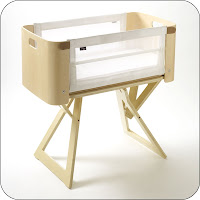
The BedNest:

Manufactured somewhere in the UK, the BedNest is a compact, travel-friendly co-sleeper crib.

We purchased an Arm’s Reach co-sleeper and used it for our son’s first 8 months. The Arm’s Reach beats the BedNest in a few ways: it’s larger, the mattress can be lowered to play-pen height, and its about half the price. But, the BedNest definitely wins for style and compact storage/travel-ability.

Maybe we’ll save up for one before we make way for a baby #2?

Sprig Toys:

My mother purchased this Sprig “Dino Adventure Rig” for my son for his first birthday. Sceptical of any gift arriving in such colorful wrapping, I was very pleasantly surprised when I was what was inside.

All the sprig toys are made from “Sprigwood”– reclaimed plastic mixed with recycled wood. They are colored without decorative paint and come in recycled, minimalist packaging. Even the electric toy series is powered by a generator using kinetic kid-produced energy.

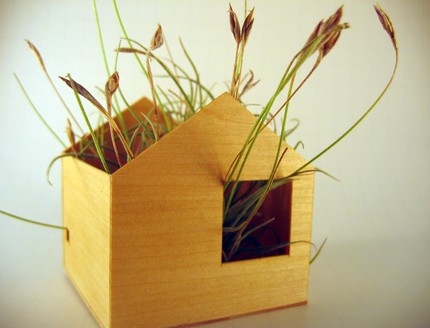
My House Party:

I was super excited to see my friends Mike and Jessica, and their lovely tiny wooden houses featured all over my favorite design websites last month.

You can visit their online store to purchase the darling things, along with an assortment of air plants.

Sixx Design:

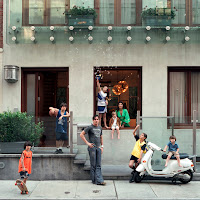
This husband and wife design team gets my vote for “best urban family homes.” (At least, the best I’ve seen this week.) Of course, it would take me winning the lottery, selling a kidney, or harvesting a few eggs to contract their services, but I think it would be worth it.

Props for:
Keeping it urban (most of their work is in Manhattan); having a million kids (7, to be exact); naming your kids weird, but not too weird names (“Major” is my personal favorite).

Check out their book Downtown Chic and an upcoming gig on Bravo.

Happy Saturday!

Go Play Outside: Urban Playscapes

My husband is trying to convince me to move out of downtown into a nearby neighborhood. (Don’t worry, we haven’t jumped ship yet, but I am patiently hearing him out.) There’s a lot that goes into this discussion–some current issues with our apartment, plans for a family business, housing co-op ideas, etc. One main concern that both of us share: if we stay downtown, where will our son play?

I’ve been thinking a lot about outdoor play places and an experience last week solidified some things for me.

A friend of ours held their daughter’s fourth birthday party at a play equipment manufacturer’s warehouse out in one of Cincinnati’s east suburbs. This company opens their warehouse/showroom to the public for open play and to rent for parties. All of their display pieces are fair game, everything from trampolines, blow-up bouncy castles, play structures, and basketball hoops. It’s a brilliant idea and it was an awesome party. Thankfully, my son can walk and climb, so there were a few things he could play on (including swings–which he loves), but most of the play structures are optimized at an older age. One structure was super cool. It was three full stories, connected by ladders, kept secure with vertical bars, and featuring a three-story winding slide. The price tag read: $35,000.
Yep, $35k.

This led me to ask myself: If I had $35,000 to spend on a play structure for my children, how would I spend it? And I’ll tell you what–the last thing I’d spend it on is a mass-produced, bright blue steel structure for my backyard.

Now, let’s put this into a public space perspective.
Most conversations surrounding public playscapes focus on two main issues: safety and durability. Basically, “How can we keep our kids busy without hurting them? Oh! And we don’t want to have to replace anything in a year or two.” Now, I understand that both safety and durability are important questions to ask. But, are they the only questions we should be asking? And are they the most important?

What did kids do before steel play structures were invented?
Geez! They must have been bored out of their minds, right?

Think about your average urban (or suburban) public play area.

Now, think about the childhood experience of outdoor play in a natural area.

Think about the materials, the shapes, the colors, and the textures. Compare the freedom and curiosity that come alive in natural spaces to the strictures and literal play of manufactured play areas. Sure, these play places keep kids busy and relatively “safe,” but the kids aren’t learning anything, exploring anything, and definitely aren’t creating anything. Instead, they run around in circles inside a fence, climb up and down and up and down the same ladder, and swing back and forth on swings. Geez, even video games require some sort of strategy!

I would venture to say that most public play areas are a terrible waste of space and resources because they bear such little resemblance to natural areas.

Believe me, I know that the solution for most of us does not involve abandoning public play spaces because it’s unrealistic to expect that those of us in urban areas should drive to the nearest wooded area whenever our child wants to play ouside. Instead, I wonder what would happen if we reconsidered the way we design and structure our public playscapes. This wouldn’t satisfy the entire problem–we still need to expose our children to natural spaces–but it would satisfy the day-to-day need for children to play in ways that make them stronger, smarter, and more creative, rather than simply occupied.

What if we designed our urban play areas to more closely resemble natural areas?
And what if, instead of buying a $35,000 play structure for a public park, we hired a landscape architect or naturalist to create a public greenspace area that encouraged natural play and activities?

I’ve found a lot of great resources online for just this sort of idea, and there are other cities and countries that are already doing this (or have been doing it for decades). When I get the time, I hope to post some links to articles, photos, and other great resources.

For now, I’m curious what you think about the average (sub)urban play area and how it compares to your experiences of play as a child.

An Ode to My Baby Boy

In honor of our son’s first birthday, we hosted an open house. We used a loose disguise theme, since Izzy loves hats and glasses.

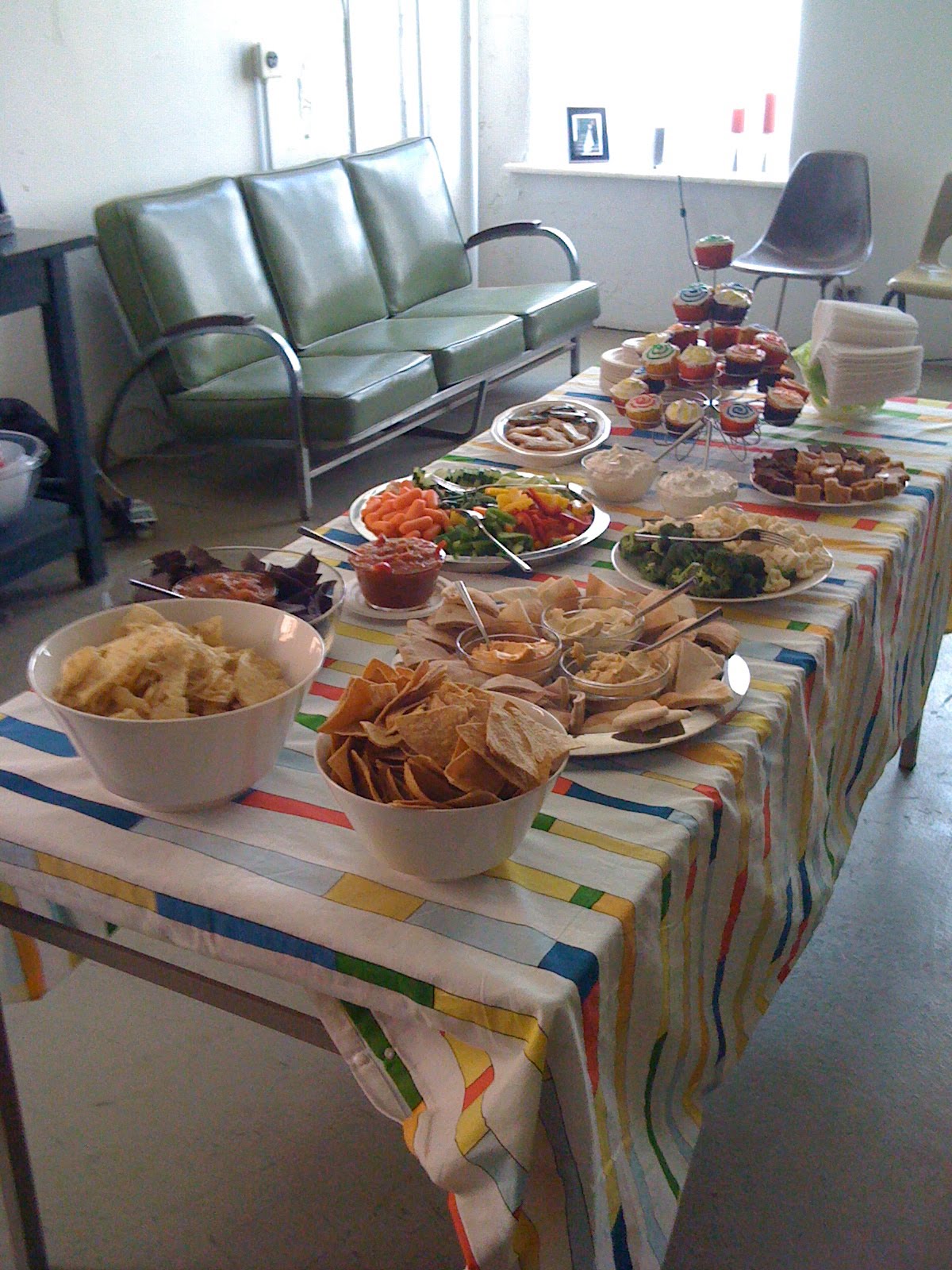
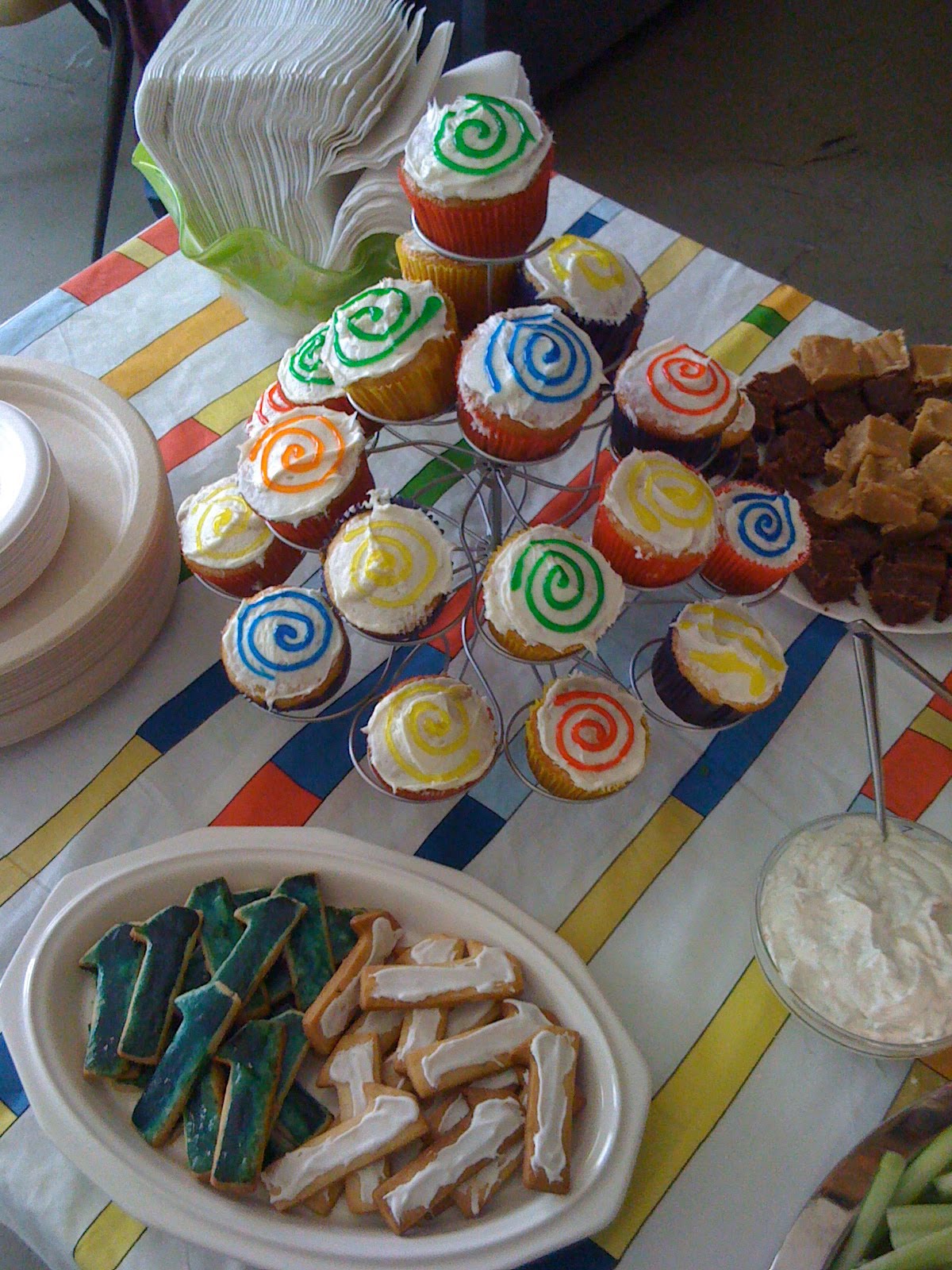
We kept our food simple: lots of healthy snacks and a few desserts.

I made about a million cupcakes and my grandmother’s butter cookies in the shape of the number “1.”


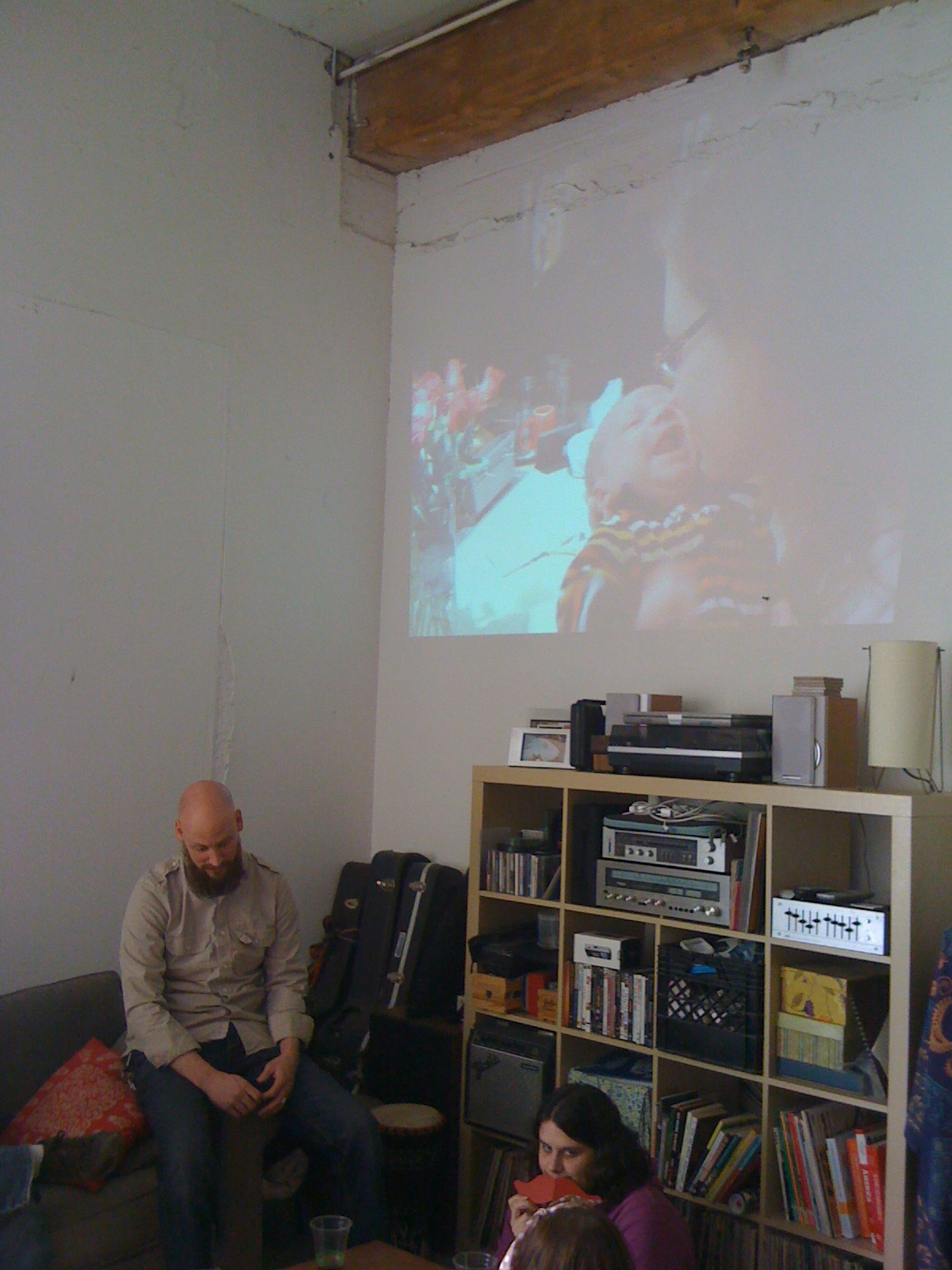
We took advantage of our high ceilings and projected a slideshow of our favorite photos of Izzy’s first year. It looped during the entire party.

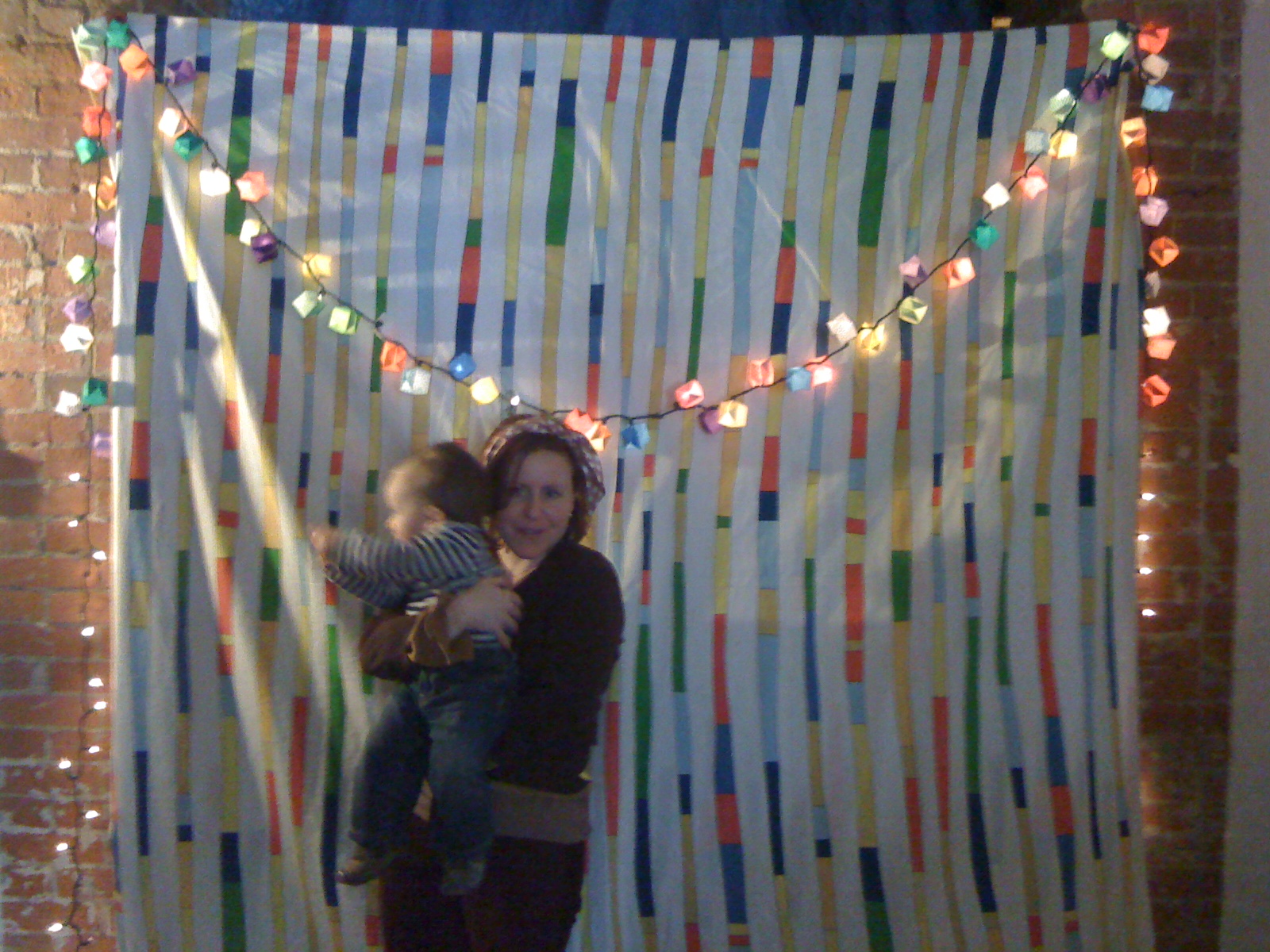
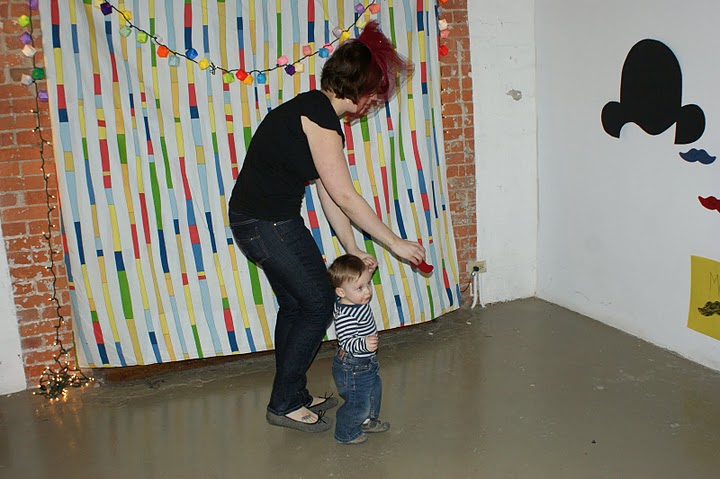
I made a hundred or so origami paper lanterns (and had extra paper and instructions ready for guests to make some, too) to decorate a make-shift “photo booth” to catch friends in their disguises. Sad to say, the natural lighting in our apartment is terrible and so very few photos came out well.

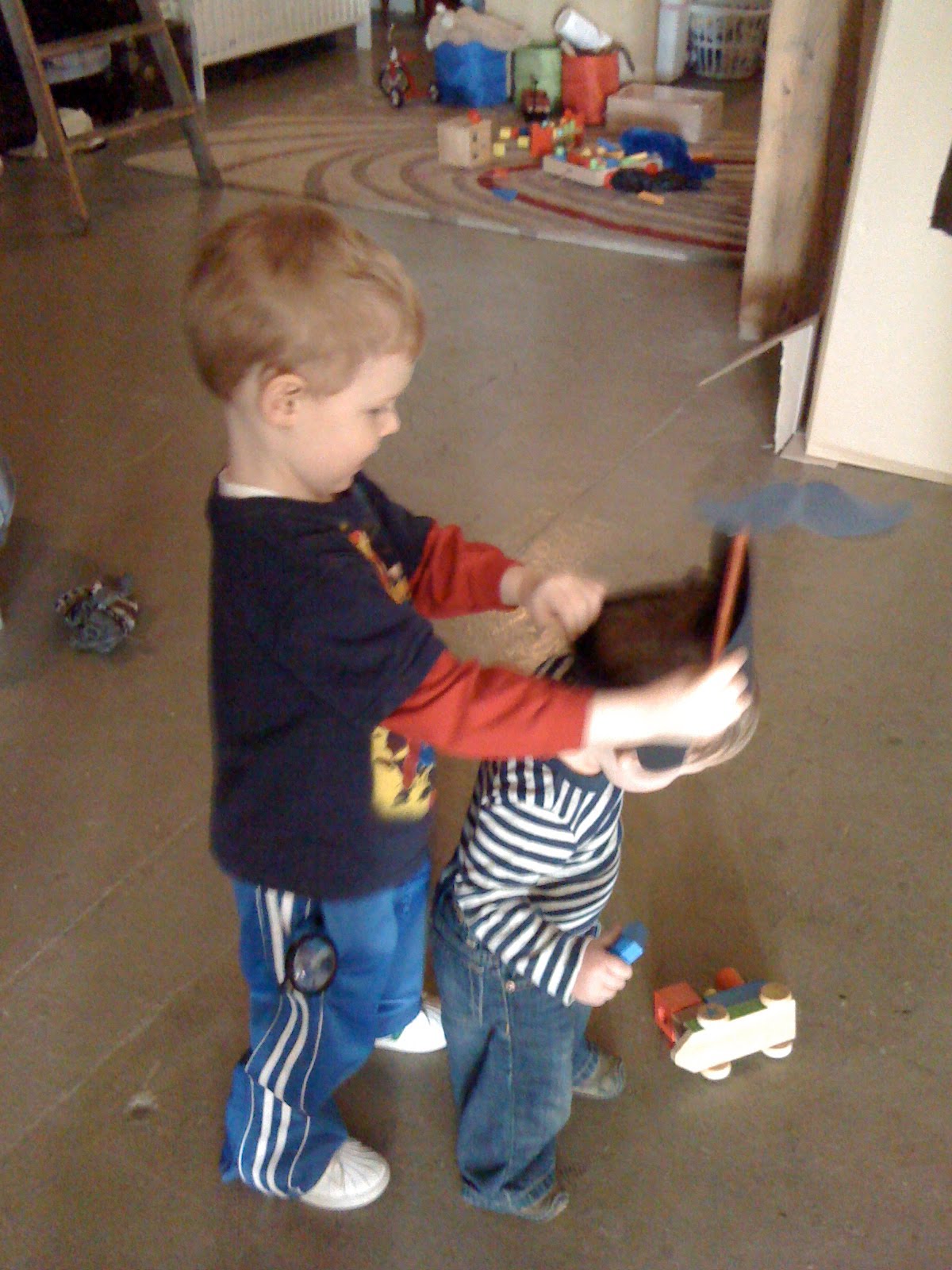
I made Izzy a paper hat and mustache for his disguise. He didn’t like it so much, but his cousin did and kept trying to get him to wear it.

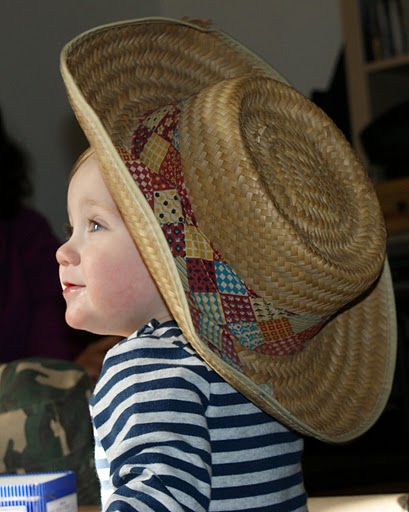
He liked this hat a little bit more.

We played a rousing game of “Pin the Mustache on the Man.”

The host and hostess.

Happy first birthday to our sweet little boy!