Is the Urban Middle Class Destined for Extinction?

Blogger Aaron M. Renn (aka: The Urbanophile) posted a link on Twitter to an interesting New York Times article that questions the affordability of Manhattan real estate for middle-income residents. The article discusses how market rates have shifted in the past 40 years, the difference between market rate and rent-regulated housing, and the near complete void of anything market rate that is affordable to the average family.

You can read the complete article here.

As a property-owner in an area of Cincinnati that is experiencing a renaissance, this issue hits really close to home. My husband and I are firmly planted in the middle-class. And we benefited from an opportunists’ real estate market a few years ago. But, were we to try to find a similar home now, it would be very difficult, maybe impossible. Heck, even a significant raise in taxes might make our home unaffordable.

Urban revitalization is a risky endeavor. But when we talk about the dangers of gentrification, we usually talk about how it will effect the poor, the homeless, those who depend on Section 8 and other “affordable housing” situations. We rarely talk about the way it will effect the rest of us–the working class and the middle class, those who benefit greatly from the amenities and accessibility of the urban environment. When the difference between the costs of subsidized housing and market-rate housing continues to increase, will there be anything left for the rest of us?

In a city like New York City, the middle class was being phased out decades ago. Am I crazy to think that Cincinnati could be inching toward the same problem, even if if happens on a much smaller scale? Similar to the outlying boroughs of NYC, there will still be neighborhoods of Cincinnati in which average families can purchase homes and rent affordable apartments. But, what about those of us who actually want to live downtown?

Some other things to consider:

-Let’s be honest: Having a family changes everything.

“One way to stay in Manhattan as a member of the middle class is to be in a relationship. Couples can split the cost of a one-bedroom apartment, along with utilities and takeout meals. But adding small roommates, especially the kind that do not contribute to rent, creates perhaps the single greatest obstacle to staying in the city.”- O’Leary, The New York Times

Since I believe that strong families are so important for the health of a community, I believe it’s absolutely necessary that there be a place for families to live in vibrant, thriving cities.

-Employers can help. It’s not unheard of for large employers–universities, hospitals, corporations, etc.–to purchase property and rent to employees at subsidized rates to aid in hiring, relocation, and job stability. What if event smaller businesses did this? What if there was a resurgence of business owners living within walking distance of their businesses and providing reduced-rate housing for their employees?

-There has to be a way to get in on the ground-level of development. One way that middle-income families make it work in Manhattan is that they have been around long enough that they secured their real estate before prices soared. They have, essentially, been grandfathered-in to the Manhattan lifestyle. Cincinnati’s downtown is still relatively affordable, but it may not always be. If you’re anything like me, you could not afford the new built-to-suit single-family homes in Over-the-Rhine. But many of us could possibly afford one of the remaining vacant properties that are ready for renovation. Securing these properties can be tricky and finding loans for their rehabilitation even trickier. So, it reasons to say that cities who wish to preserve a thriving middle class must encourage entrepreneurship and provide the means for early investment by those who have staying-power in their community.

I’m curious to know whether all cities experience this phenomena of a disappearing middle class and how they cope. I’d also love to know more about the rent-regulated properties in NYC. Who regulates them and what does it take to get ahold of a property? I’m also curious how Section 8 housing plays into the issue and when the number of government housing subsidies actually works against the working class to limit their housing opportunities.

Anyone want to chime in?
Urbanism, Sub-urbanism, and why I’m tiring of the Streetcar debate.

I’ve lived in Cincinnati for 8 years.

My first job was at Kaldi’s on Main Street in Over-the-Rhine. Those first few years, I spent a lot of time in the neighborhood. I met my husband there and we were married a few blocks away.

Our first apartment was in Over-the-Rhine. We decided to plant our roots downtown for multiple reasons, many of which I won’t get into here. But, basically, we love Cincinnati and we believe that a strong urban core is the foundation of a strong city. There are other neighborhoods that we love, neighborhoods that might become our “home” someday. But, Over-the-Rhine was where our heart was.

The first two years of our marriage made me an “urbanite.” We lived in a large, industrial loft space in a barely habitable old brewery building. Both of our work offices were a mile away. Our church was a mile away. I learned to shop on foot, in small trips. I got used to the sounds of street life. We got to know our neighbors. We learned the history of our city, the feel of the streets and alleys, the loom of the buildings as we walked by.

We didn’t do touristy, out-of-towner things in our neighborhood; we learned to live there. When we first felt the call to purchase a home, we talked about multiple options, and multiple locations. I had one simple request: I must have either a walkable business district or lots of greenspace.

We tried to buy a monstrous estate on Dayton St. in the West End, but they refused our offer. (A friend bought it, instead.) We looked into purchasing a dilapidated old estate tucked away in North Avondale on 2.5 acres, but they weren’t interested in us as much as we were interested in them. They wanted to “develop” the land.

We walked through a few homes in Betts-Longworth; we walked through a few in Mt Prospect. And then we got an email from an acquaintance saying that he was selling his home in Over-the-Rhine and we called him right away.

The short version of the story is that the owner liked us. He liked that we are people of faith (like him). He liked that we were going to be raising a family in his old home, where he raised three children with his late wife. He liked that we are committed to a similar vision for the city as he had been for his 40+ years in the neighborhood. So, he reduced the price of his home to something we could afford and sold it to us.

That summer, we made the transition onto Orchard Street, which is perhaps the most beautiful street in the city. The house itself if a labor of love and a work-in-progress, but it offers plenty of space, room to grow, and everything an urban family could desire including a backyard (which will someday be functional as such).

I love our life in the city. I love the wealth of opportunities and experiences that it offers our children. I love the warmth of neighbors and passers-by. I love the architecture and parks and noise and lights. As a severe introvert, I love the ease of daily contact with other people, both friends and strangers, and the feeling of a city alive about me.

Living in the city is not always fun. It sometimes requires more work, especially with kids. So, I am sympathetic to those who say, “Oh! I could never do that!” And I am very sympathetic to parents who want a neighborhood where their young children can play outside unattended, where they can unload groceries from inside their garage, and where they don’t need to worry about issues like lead paint and air quality. And I believe that there are many legitimate reasons to live in sub-urban areas—closer proximity to family or work, for example.

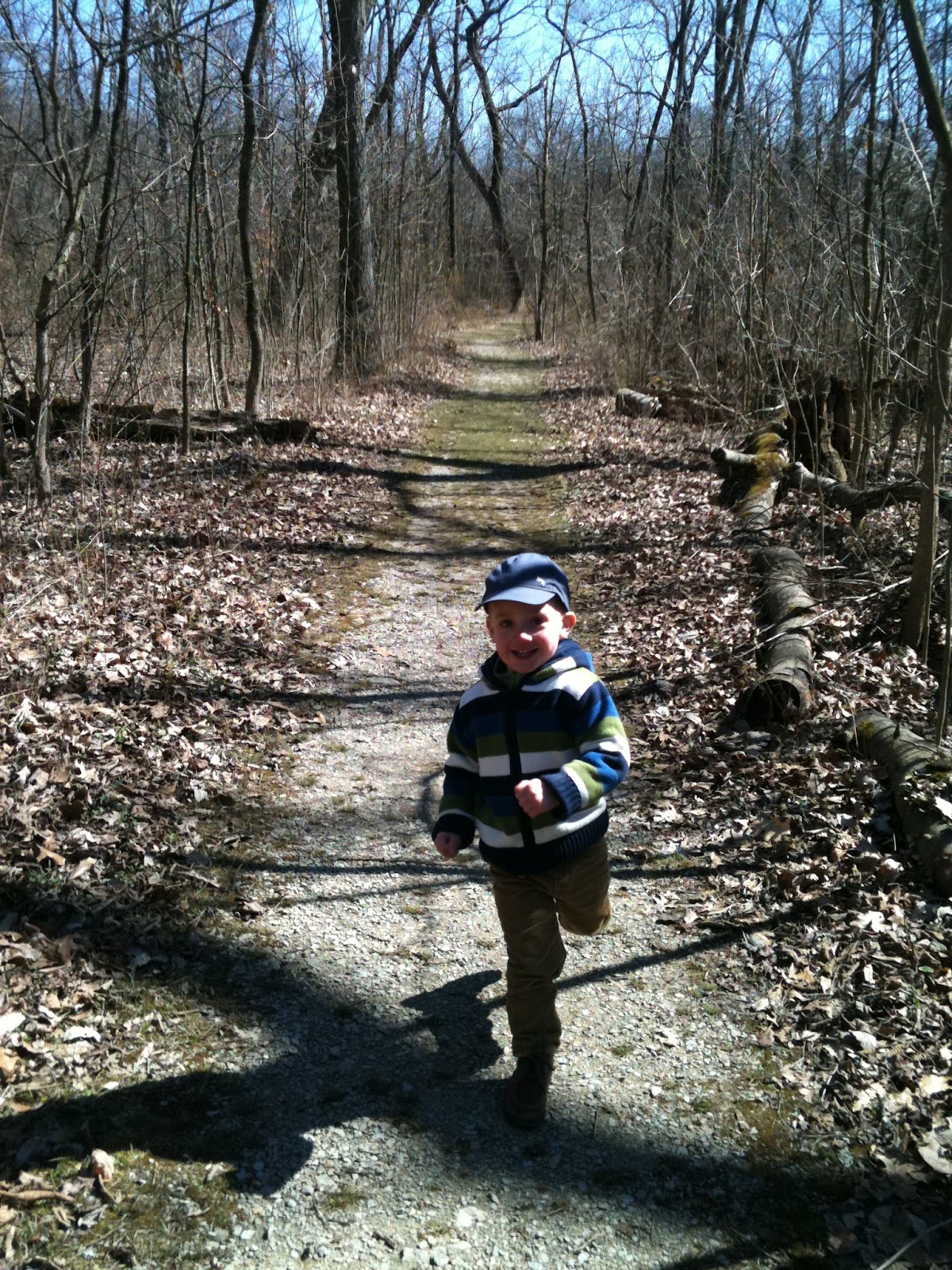
There are times when my husband and I stare at each other from across the room and quietly suggest: Wouldn’t it be nice to park in front of our own house? And we often dream together of leaving the city far behind and relocating to a rural space where our kids can be wild and reckless in the woods and come home at sunset with dirty hands and muddy boots.

But, at the end of the day, I am officially an urbanite. And though some wild, faraway place may be in the cards for us someday, choosing against the suburbs is now a matter of principle for me, not simply preference.

What does this have to do with the infamous, polarizing issue of the Cincinnati streetcar? It’s become pretty clear to me that Cincinnati residents are not only divided on the issue, but that no one is budging. We’re at an impasse and the only deciding factor at this point is that the public voted a majority of pro-streetcar City Council members in the last election, which is why the streetcar continues to move forward.

The difficulty of the debate is that one side sees the development of a streetcar system as a legitimate investment in the future of the urban core and the other side sees it as frivolous spending on a pet project—“a streetcar to nowhere.” These are ideological issues, not issues of preference.

Basically, we don’t simply live in different neighborhoods; we live in different worlds.

There are legitimate reasons to oppose the streetcar. Heck, I’m a Conservative! I understand the need for fiscal responsibility and responsible spending. But even a fiscal conservative believes in the importance of sound investments, building a future, and creating a foundation. And even the hesitant supporters—those who support pursuing the streetcar project at a future time, though not now—would agree that a project like the streetcar has the potential to strengthen the urban core, bring economic prosperity, and offer opportunity for further development.

The problem is this: the majority of those in opposition to the streetcar have a fundamentally different view of the urban environment, its infrastructure, and lifestyle, than do its supporters.

They see the city as a holding place for poor, homeless drunks and a recreational facility for wealthy yuppies. They do not believe that normal people actually live here. They do not believe that people with their level of wealth or education would choose to live here.

They do not understand the design of cities and do not share the vision of car-lite, rail-strong city. They do not care about the thousands of Cincinnati residents whose lives would someday benefit from affordable, convenient public transportation. (How other people find their way to home and work does not worry them, so long as those people don’t end up living in their neighborhoods.)

Their lives are dependent on cars and highways. They have not conceded the high costs (physical, social, and environmental) of car-dependent communities. They do not know a world without a 30-minute commute.

They do not share parking spaces, driveways, sidewalks, front porches, or front yards; of course they cannot imagine sharing transportation.

They are willing to invest billions of dollars in improving over-used highways and bridges surrounding the urban core, while neglecting characteristically urban transportation options which bolster urban life.

They do not see the streetcar as a sound investment because they do not believe that a pedestrian, urban life is a legitimate lifestyle choice of rational people (and families). So, they refuse to relinquish their control of the urban core to those who actually live, work, and play there.

And no one is going to change their minds.

I am not, nor have I ever been, a die-hard streetcar supporter. As I said earlier, I believe there are legitimate reasons to oppose—or perhaps postpone—the project.

But, I am an urbanite.

I believe that a strong urban core is the foundation of a strong city. And so I have to trust the history of cities and contemporary experts of urban design. They both agree that a streetcar system is a solid investment for our city.

So, I am tired of the debate.

We don’t simply live in different neighborhoods; we live in different worlds.

I have chosen to invest in a historically-significant shared built environment.

Many others took out a half a million dollar loan for a private, .25 acre plot of former farmland.

I have already said that there are legitimate reasons to choose a sub-urban lifestyle. But, to oppose urban development because you do not believe that there is fundamental, inherent value to the urban core of our city shows a complete lack of understanding.

The strength of our urban core is the only thing that makes your comfortable life in the suburbs possible.

And, until you believe that, we have nothing more to discuss.

And, by the way–

Stop calling it a “trolley,” for pete’s sake.

It’s a damn streetcar.

Go Play Outside: the 45202 Family Hiking Club

The 45202 Family Hiking Club: Out to prove that you don’t need to leave the city to GET OUTSIDE.

Last month, I initiated a hiking club for families (and friends) in and near downtown. We’ll be hiking together once a month, year-round (yes, four seasons), and the goal is to stay within the city limits or in urban Northern Kentucky. Every month, a different family will choose the location and lead the hike, to help the rest of us familiarize ourselves with places we may have never been before.

In May, for our first meetup, I led us on a hike through the trails at Imago in Price Hill.
This month, we’ll be meeting at Fernbank Park out west on River Rd.

If you are a family committed to both urban living and to providing your children with experiences in nature, even if you can’t make it every month, you are welcome to join us. As of now, the event details are being communicated via Facebook, and the group is invite-only so there is some level of confidentiality about locations, times, and such.

Let me know if you’d like to be included!

My Boy’s a Star!

A month or so ago, the kind folks at Lauren Edward (a husband/wife film production company currently residing in our neighborhood) spent a few hours filming my son for the opening video for this week’s CEOs for Cities conference, hosted in Cincinnati. Not only does the conference look awesome, but the video really makes our city look like magic, doesn’t it? (And my son looks pretty awesome, too…)

This week, our city also hosted a GOOD Ideas for Cities event. I RSVP’ed for the event, but did not end up attending. I opted, instead, for letting my son play with the kids on the street while my husband and I chatted with our neighbors.

It’s a great time to be in Cincinnati, isn’t it?

Did anyone attend either of these events?
Tell me what happened!
Any good ideas going around?

Go Play Outside: Sharon Woods

Did you know that it’s only $10 a year for access to all of Hamilton County’s amazing parks!?

Since I moved to Cincinnati nearly seven years ago, I’ve only gone two years without a Parks pass. But, to be honest, I haven’t used any of the passes very often. I usually just consider it a $10 donation to the Park District. This year, though, I’m making an effort to explore the parks with my kids.

Recently, we took two trips to Sharon Woods, which is the park I know best because we have some good friends whose property abuts the park.

Wanna see some photos of trips!?

45202 Families

Parenting in an urban area can be a little isolating.
90% of the peers you see on a daily basis are either child-less or live 20 minutes away. It can be hard to make friends and stay active in your own community.

But most of us are on Facebook these days, right?
A few weeks ago, I started a Facebook group for “45202 Families.”I’m hoping this group will be a way to connect folks who live, work, or play downtown so we can share recommendations and plan events.

The group is “invite only,” so let me know if you’d like to join!

And I’ll try to get around to blogging again eventually…