Pitching a Tent for Magnet Schools

In Cincinnati, parents have the choice about where their children attend school. In the public school system, children can default to attending their neighborhood schools, or apply for enrollment in one of the magnet schools. Many of these magnet schools are designed around a specific educational pedagogy–Montessori or Paideia, for example–or a certain focus of education–foreign language or fine arts, for example.

The competitive nature of enrollment in these magnet schools is understandable. First of all, Cincinnati magnet schools are free for city residents. And because they are sometimes much higher ranked in academics and a bit more culturally refined than neighborhood schools, these schools are a great option for parents who would consider private or parochial schools if it were not for the price.

There is a catch.
Some of these schools are so desirable that they attract too many families. To keep enrollment manageable, CPS has developed a system that requires some pretty serious dedication from the family.

A recent story in the Cincinnati Enquirer covers the phenomenon of the CPS magnet school enrollment process:

“The magnet schools, which generally have high academic ratings and focus on specialties like foreign language or the arts, accept students on a first-come first-served basis. At most schools there is no problem getting in. But at Fairview and a handful of others, lines form days in advance.”

I have mixed feelings about this “first-come first-served” policy.

On the positive side, CPS can rest assured that only the most committed families will enroll their children in these highly competitive schools. This obviously contributes to the high academic achievement of such schools, as well as the shared commitment to success. This policy also gives parents the opportunity to provide the best education possible for their children, regardless of financial restraints.

On the negative side, it’s not an equitable policy. “First-come first-served” policies like this take a lot for granted. First, that all parents have the possibility of taking 3-5 days out of their lives to camp out on the school’s front yard. Second, it presupposes that a child’s worthiness in not inherent, but is dependent upon their parents’ willingness to go to such lengths.

Another major inequality built into the policy is the way it effects the neighborhood schools. In this system, the children privileged enough to have parents willing to sacrifice for their children are the only ones offered an option outside of their own neighborhoods. Where does that leave the rest?

So, if this system is not an equitable system, what other option do we have?

I do believe that committed parents should be rewarded for their commitment. And I also understand that any parent who wants the best for their child would (hopefully) do whatever necessary to make it happen–i.e. make certain they can be in line when they need to be to secure that spot in their desired school. So, completely tossing out the policy doesn’t make sense.

I guess one simple question is this: Why doesn’t CPS reserve a certain percentage of the open spots for those who are not able to make it to the front of the line? It seems like this would make everyone happy. The parents at the front of the line would get theirs spots. And the folks at the back of the line would be entered into a lottery for the remaining slots.

Is this already happening?
Am I missing something?

And maybe there is another question to ask:
What is the point of magnet schools?

According to Wikipedia’s article on Magnet Schools:

“Districts started embracing the magnet school models in the hope that their geographically open admissions would end racial segregation in “good” schools, and decrease de facto segregation of schools in poorer areas. To encourage the voluntary desegregation, districts started developing magnet schools to draw students to specialized schools all across their districts. Each magnet school would have a specialized curriculum that would draw students based on their interests. One of the goals of magnet schools is to eliminate, reduce, and prevent minority group isolation while providing the students with a stronger knowledge of academic subjects and vocational skills. Magnet schools still continue to be models for school improvement plans and provide students with opportunities to succeed in a diverse learning environment.”

Can someone with more personal experience in the Cincinnati magnet schools tell me if this is working? My fear is that instead of desegregating the more under-served and impoverished neighborhood schools, magnet schools actually pull the most opportunistic families out of all of the neighborhood schools and leave even mid-income neighborhood schools culturally impoverished. The children who end up in the magnet schools benefit; everyone else suffers.

I don’t know that I can offer any better solution to the problems in our public schools. I can understand a parent’s desire to provide the best opportunity for their children, so I’m not willing to fault those who stand line for days to secure those coveted kindergarten seats.

My last question:
What would happen if, instead of hand-picking the best regional opportunities for our children, we invested our time and energy in our own neighborhood and community institutions, whether they be educational, cultural, or religious? How would the most disadvantaged children in our city benefit from this local investment by the parents of the most privileged ?

Perhaps what I’m suggesting is not the economic concept of the “redistribution of wealth” but, rather, the redistribution of educational opportunity.

As for our family, my husband and I have some crazy schemes for the education of our children. And I’m not ready to discuss them here. For now, I’m simply going to hope for good weather for those camped out on Clifton Ave, and pray for the welfare of the children whose parents won’t show up, but who deserve something better than their neighborhoods can provide.
Shopping Downtown

Some folks think that “there is no place to shop downtown.”

I’ll admit that our city does not have the best example of a downtown shopping district–at least not anymore. But at one point, I’ve been told, people flocked to the Central Business District to do their shopping. What happened? (Maybe someone who knows more about the history of downtown could fill me in?)

This is a case of the “chicken or the egg.”
Did the shopping district die because residents stopped coming downtown to shop, or did residents stop coming downtown because the shopping district died? Either way, I believe that a vibrant shopping district is directly related to a thriving residential presence in downtown.

Cincinnati is very decentralized. It may be due to the large hills or due to intentional urban planning but, either way, residency in Cincinnati centers around neighborhoods rather than downtown. But, even in our “best” neighborhoods, there are few truly thriving shopping districts. Most everyone in Cincinnati who needs to buy the basics–underwear, toilet paper, duct tape–must either get on a bus or get in a car to find the nearest place to buy them. And even in areas where stores are nearby, they are not designed for pedestrians; most of America’s new, expensive shopping districts are designed for shoppers traveling by car via the highway, not by foot via the sidewalk.

In the past two years, I’ve re-adjusted my habits of shopping to reflect a pedestrian life. And, contrary to popular belief, it appears that downtown residents have plenty of places to shop.

Just a sampling of the stores (that I frequent) within a 15-minute walk of my home:

Macy’s
TJ Maxx
CVS
Kroger
Findlay Market
Avril & Bleh Market
Park + Vine
Mica 12/V

If I am smart about my shopping, I can go days or weeks without needing to drive to nearby shopping center. Believe me, I love a trip to Target just as much as the next mom and I still stop in at large grocery stores for the occasional hard-to-find item. But, it’s awesome to see my trips out of downtown become less and less frequent.

As far as prices are concerned, the extra money I may spend by purchasing what’s available nearby rather than comparing prices is saving me a ton of gas and car maintenance costs. No more chasing cheap prices around town.

At this point, I honestly can’t understand how some people find car rides, parking spots, and 10,000 sq ft stores to be more practical than a five-minute walk to a smaller store. Sure, I can’t do a month’s worth of grocery shopping at once (that is, until I buy one of those fancy bike trailers I’ve been eying…), but shopping in the neighborhood keeps me on my feet and out where I can meet my neighbors and see all of the exciting things that are happening in our city. I love how this adjustment in my shopping habits has changed my perspective on my neighborhood.

I know that it won’t always be so easy, depending on how many children we end up with. And I know that I won’t be so excited to run errands on foot when there is snow on the ground. But, for now, the pedestrian life is grand. (And I’ll just need to buy a good pair of snow boots.)

As a sidenote:

In my “perfect Cincinnati,” where our center city trumps the suburbs as a shopping destination, the Tower Place Mall (or the new Banks development) would be developed to include a few more large clothing and shoe stores (a la Gap or DSW), Patagonia would open up shop, there would be an Apple store, Joseph Beth would re-locate to the neighborhood, an REI would move into town, and a small-ish grocer like Fresh Market or Trader Joe’s would settle in, too.

Heck, then I’d never have to leave downtown.

What would your “perfect Cincinnati” include?

Just Your Typical CityKin

Our friend and neighbor over at CityKin just posted a great summary of a typical weekend for a family living in downtown Cincinnati.

Visit it here and then scroll through the rest of his blog for proof that the city really is a great place to live as a family.

On a personal note: It was great to finally meet this neighbors in person while walking home from dinner Friday night. (I met Mrs. CityKin briefly, a year ago, when I answered their providential call on the blog for someone interested in taking their used cloth diapers.) And many thanks to CityKin’s wonderful children who sent my son home with two glow-in-the-dark bracelets when we left. He wore them to bed that night and I could see them still glowing early in the morning.

Ahh… the beauty of the pedestrian life and the friends you meet along the way…

Kids Not Welcome

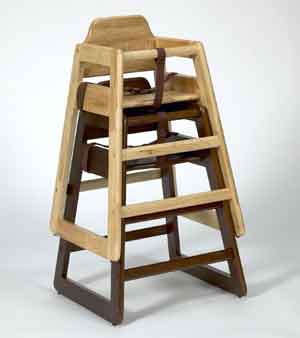
Every time a new restaurant/diner opens downtown, and a friend tells me of their recent visit there, I ask a simple question: Did you see any kids or highchairs?


Most people, obviously, don’t look for a highchair when they walk into a new place. But, from a parent’s perspective, the absence of this simple object says one thing to me: Your kids are not welcome here.

I can understand a restaurant owner’s fear of becoming a *gasp* “Family Restaurant,” and I can understand that a toddler is not their primary clientele. But, I also know that there a very large number of young adults with young children who would love to be able to support these local businesses, but the businesses seem to not want their support.

Yes, I can still sneak in with my son and let him sit on my lap while we both try to eat. And, yes, a booster seat is a step in the right direction. But, a young toddler is much more likely to sit still if seated in a high chair. My son is very well behaved (and we know when our son is not behaving and it’s time to leave). Heck, these business owners might actually like having us around!

So,

Dear Business Owners:

I support local business and I’d love to support yours. But, until you are willing to accommodate my small and well-behaved family, you’ll be relegated to my “date night” restaurant list. This list is large and not often consulted for dinner plans. Maybe we’ll see you (and you’ll see our money) in a few years?

Sincerely,
Your neighbor.

(And don’t even get me started on coffee shops and gas station bathrooms without diaper changing stations… ugh!)

Summer is Over?

Wait!

Today was the first day of class at Cincinnati Public Schools and I’m amazed. Has Summer really passed by so quickly? Did school start this early for me when I was a child?

I’ve noticed recently how slowly I seem to be moving compared to my surroundings.
Maybe it’s my lack of media consumption that keeps me out of the loop;
Maybe it’s the constant attention I give to my toddler;
Maybe it’s my husband’s busy building schedule;
Maybe it’s our move from busy Vine St. to this quiet, tree-lined street five blocks away.

In addition to the start of the school year, which always signifies the official end of Summer to me, downtown Cincinnati–and Over-the-Rhine, specifically–seems to be moving very fast. New restaurants; new shops; new neighbors. It’s enough to make a girl like myself yell, “Stop! I just can’t keep up!” I swear, even though I leave the house every day and walk these streets, I cannot seem to move quickly enough to participate in all the excitement!

More often than not, in conversations with other young parents who live outside the city, I hear a lot of “Oh… I wish I could move into the city, but….” And then they elaborate on one of many (sometimes legitimate) reasons why moving into the city is unrealistic for their family.

To them, I say that there could not be a better time for young families to move into the City of Cincinnati.

Heck, I will go so far as to say that there has never been a better time to live downtown.

(And this is not the idealism of a brand new resident speaking. I’ve lived in OTR the better part of three years and worked here the two years before that. Even though I may not be a long-term resident yet, I’m definitely not new to the scene.)

It’s an exciting time to be in Cincinnati, no?

I only wish I had more time to spend with neighbors, make new friends, eat new foods, buy new goods, and take it all in. Maybe as the weather cools, time will slow down a bit and I will get a chance to really inhabit our great city.

Happy end of Summer, folks!
Maybe I’ll catch up with you in the Fall?